
Want your website to reach Google’s first page? The latest SEO strategies focus on creating high-quality content, improving user experience, optimizing for AI-powered search, and building topical authority. By following modern SEO best practices, you can increase organic traffic, improve rankings, and achieve long-term growth.
What is the Latest SEO Strategy?
The latest SEO strategy is a comprehensive approach to improving a website’s visibility in search engines by combining technical optimization, valuable content, excellent user experience, and strong authority signals.
Unlike older SEO methods that relied heavily on keyword density and backlinks alone, modern SEO prioritizes search intent, content quality, website performance, semantic relevance, and user satisfaction. Search engines have become much better at understanding context, making it essential to create content that genuinely answers users’ questions rather than simply targeting keywords.
Today’s SEO also extends beyond traditional Google Search. Content should be optimized for AI-powered search experiences, voice search, featured snippets, and rich results. Websites that consistently publish trustworthy, helpful, and well-structured content are more likely to achieve sustainable rankings.
Main Benefits of the Latest SEO Strategy
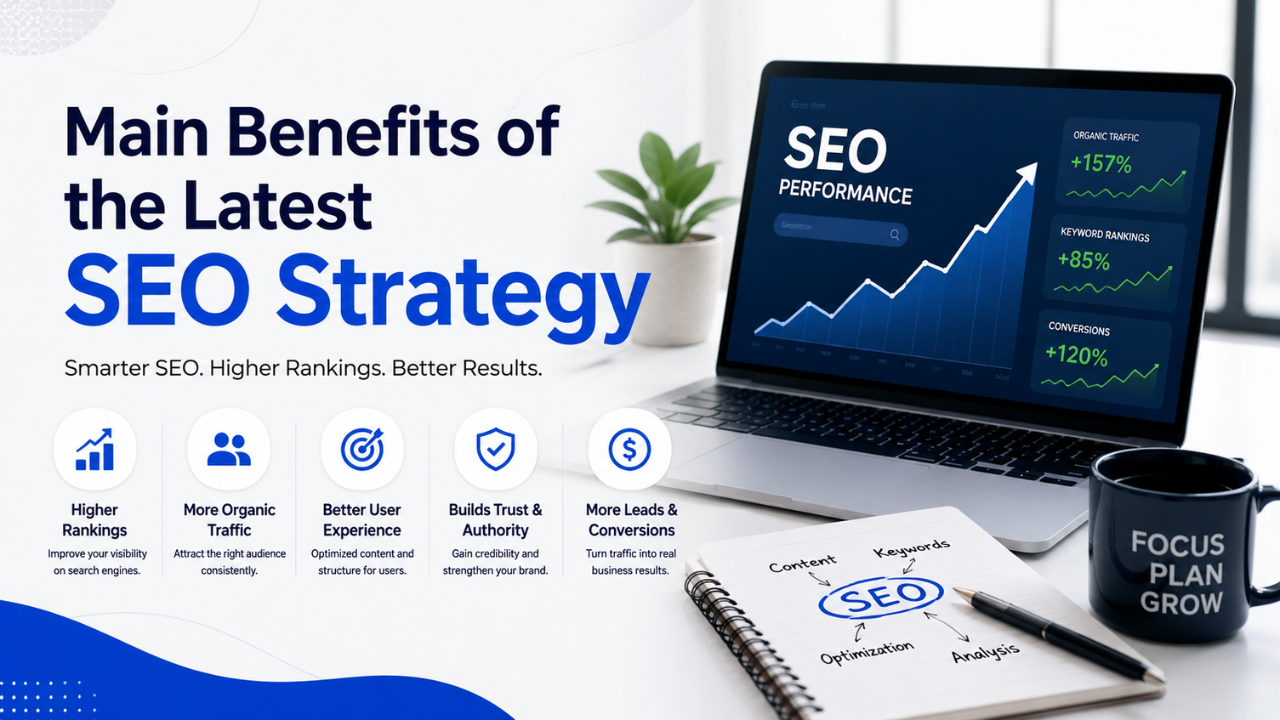
Implementing modern SEO techniques offers numerous advantages for website owners and businesses.
- Increase organic traffic without relying solely on paid advertising.
- Improve visibility for high-value keywords.
- Build trust and credibility with both users and search engines.
- Generate consistent long-term website visitors.
- Enhance user experience through faster loading times and better navigation.
- Increase click-through rates with optimized titles and meta descriptions.
- Improve conversion rates by attracting more relevant visitors.
- Strengthen topical authority within your niche.
- Increase opportunities to appear in featured snippets and AI-generated search results.
- Support long-term business growth through sustainable search visibility.
Complete Guide to the Latest SEO Strategy (Step-by-Step)
Preparation
Successful SEO begins with proper planning.
Identify Your Target Audience
Understand who your ideal visitors are and what problems they need to solve. Every piece of content should answer real user questions.
Perform Keyword Research
Instead of focusing on a single keyword, identify:
- Primary keyword
- Long-tail keywords
- Related search terms
- Semantic keywords
- Frequently asked questions
Search engines now evaluate topical relevance, making comprehensive coverage more important than repeating the same keyword.
Analyze Search Intent
Determine whether users want to:
- Learn information
- Compare products
- Make a purchase
- Solve a problem
- Find a specific website
Matching content with search intent significantly improves ranking potential.
Audit Your Website
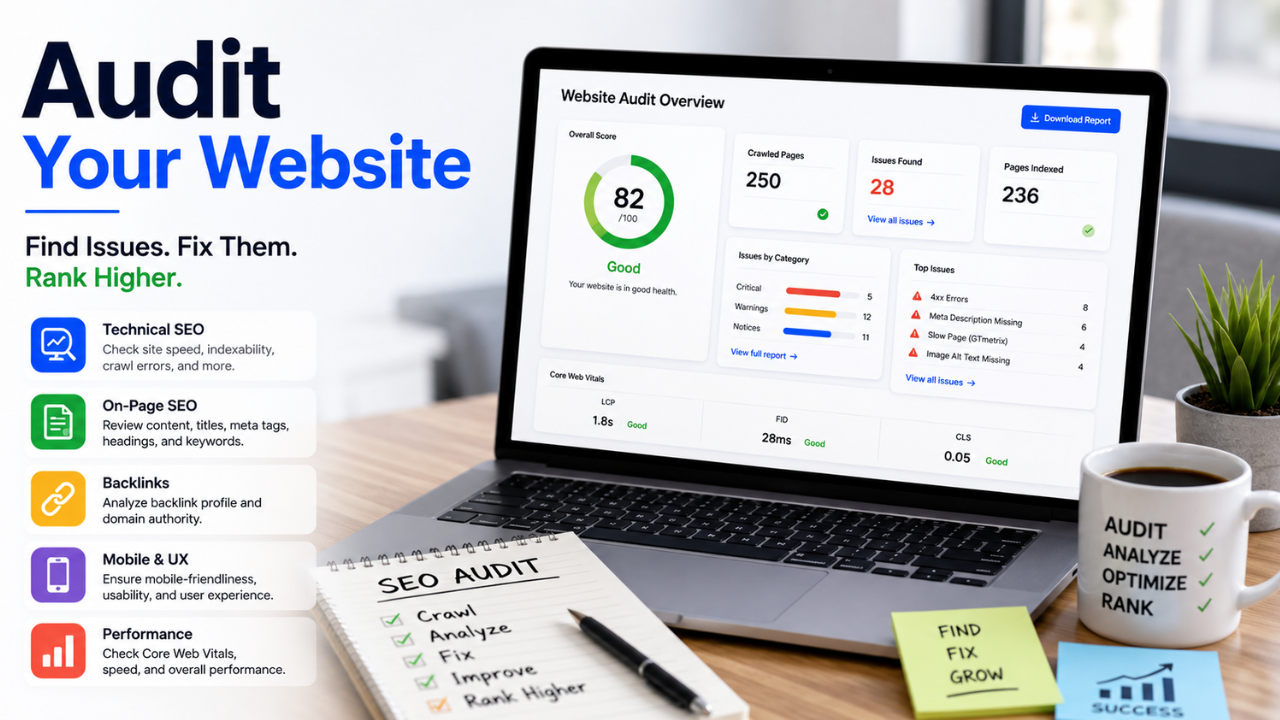 Before creating new content, evaluate:
- Page speed
- Mobile responsiveness
- Crawlability
- Internal linking
- Broken links
- Duplicate content
- Structured data
- HTTPS security
Fixing technical issues provides a strong foundation for future SEO improvements.
The Main Process
1. Create Helpful, Original Content
Content remains the foundation of successful SEO.
Focus on creating articles that:
- Answer search intent completely.
- Include practical examples.
- Offer actionable advice.
- Stay updated with current information.
- Demonstrate expertise and experience.
Avoid producing generic content that merely repeats information available elsewhere.
2. Build Topical Authority
Instead of publishing isolated articles, organize your content into interconnected topic clusters.
For example, if your website focuses on SEO, create supporting articles covering:
- Keyword research
- Technical SEO
- On-page SEO
- Off-page SEO
- Local SEO
- E-commerce SEO
- AI SEO
- Google Search Console
- Core Web Vitals
Link these articles together using logical internal links to help search engines understand your expertise.
3. Optimize On-Page SEO
Each page should include:
- A compelling H1 title.
- Clear heading hierarchy (H2, H3, H4).
- SEO-friendly URLs.
- Optimized meta titles and descriptions.
- Descriptive image alt text.
- Natural keyword placement.
- Internal links to relevant pages.
- External links to trustworthy sources where appropriate.
Prioritize readability over keyword repetition.
4. Improve Core Web Vitals
Website performance directly affects user experience.
Focus on:
- Fast loading speed
- Responsive design
- Stable layouts
- Optimized images
- Efficient caching
- Minimal unnecessary scripts
A fast website encourages visitors to stay longer and reduces bounce rates.
5. Optimize for AI Search
AI-powered search engines increasingly summarize and recommend content.
To improve visibility:
- Answer questions directly.
- Use concise paragraphs.
- Include comparison tables.
- Add FAQ sections.
- Structure content with clear headings.
- Write in natural language.
- Cover topics comprehensively.
This approach helps search engines and AI systems understand your content more effectively.
6. Strengthen Internal Linking
Internal links help search engines discover content while guiding visitors to related resources.
Use descriptive anchor text and connect relevant articles naturally. A well-planned internal linking strategy also distributes authority across your website.
7. Build High-Quality Backlinks
Backlinks remain important when they come from reputable and relevant websites.
Effective methods include:
- Publishing original research.
- Creating shareable resources.
- Writing guest articles.
- Developing useful free tools.
- Producing data-driven content.
- Building relationships within your industry.
Focus on quality rather than quantity.
8. Monitor Performance
SEO requires continuous improvement.
Track important metrics such as:
- Organic traffic
- Keyword rankings
- Click-through rate
- Bounce rate
- Average engagement time
- Conversion rate
- Indexed pages
Use this data to identify opportunities for optimization and update content regularly.
Result & Evaluation
After implementing these strategies, evaluate your progress over several months rather than expecting immediate results.
Review which pages attract the most traffic, identify keywords with ranking potential, and refresh older content with updated information. Consistent optimization helps maintain relevance and supports long-term ranking improvements.
Remember that SEO is an ongoing process. Websites that regularly publish valuable content, improve technical performance, and adapt to search engine updates are more likely to achieve lasting success.
| Traditional SEO | Latest SEO Strategy |
|---|---|
| Focus on exact-match keywords | Focus on search intent and topic relevance |
| Quantity of content | Quality and depth of content |
| Backlink quantity | High-quality, relevant backlinks |
| Desktop-first optimization | Mobile-first optimization |
| Basic keyword usage | Semantic and natural language optimization |
| Limited internal linking | Strategic topic clusters and internal links |
| Static content | Regular updates and content refreshes |
| Google Search only | Google Search, AI Search, voice search, and rich results |
Additional Tips for Maximum Results
1. Refresh Existing Content
Updating older articles with new statistics, examples, and insights can improve rankings faster than publishing only new content.
2. Prioritize User Experience
Ensure visitors can easily navigate your website, find information quickly, and enjoy a smooth browsing experience on all devices.
3. Use Structured Data
Schema markup helps search engines understand your content and can improve eligibility for rich search results.
4. Publish Consistently
Create a realistic publishing schedule and maintain it. Consistency builds topical authority and encourages search engines to crawl your website more frequently.
Frequently Asked Questions (FAQ)
How long does it take to rank on Google’s first page?
SEO results vary depending on competition, website authority, and content quality. Many websites begin seeing meaningful improvements within three to six months, while highly competitive keywords may take longer.
Are backlinks still important for SEO?
Yes. High-quality backlinks from relevant and trustworthy websites remain a strong ranking signal, but they should complement excellent content and sound technical SEO.
What is the biggest SEO trend today?
One of the most important trends is optimizing content for user intent and AI-powered search by creating comprehensive, well-structured, and trustworthy information.
Conclusion & Call to Action
Modern SEO is about much more than keywords. Success comes from combining helpful content, technical excellence, strong user experience, and topical authority into a long-term strategy that serves your audience first.
If you found this guide useful, share it with other website owners and digital marketers. Explore our other SEO and digital marketing articles to learn more strategies that can help your website grow its organic traffic and reach Google’s first page.